Young @ Art

Hidden Sickle

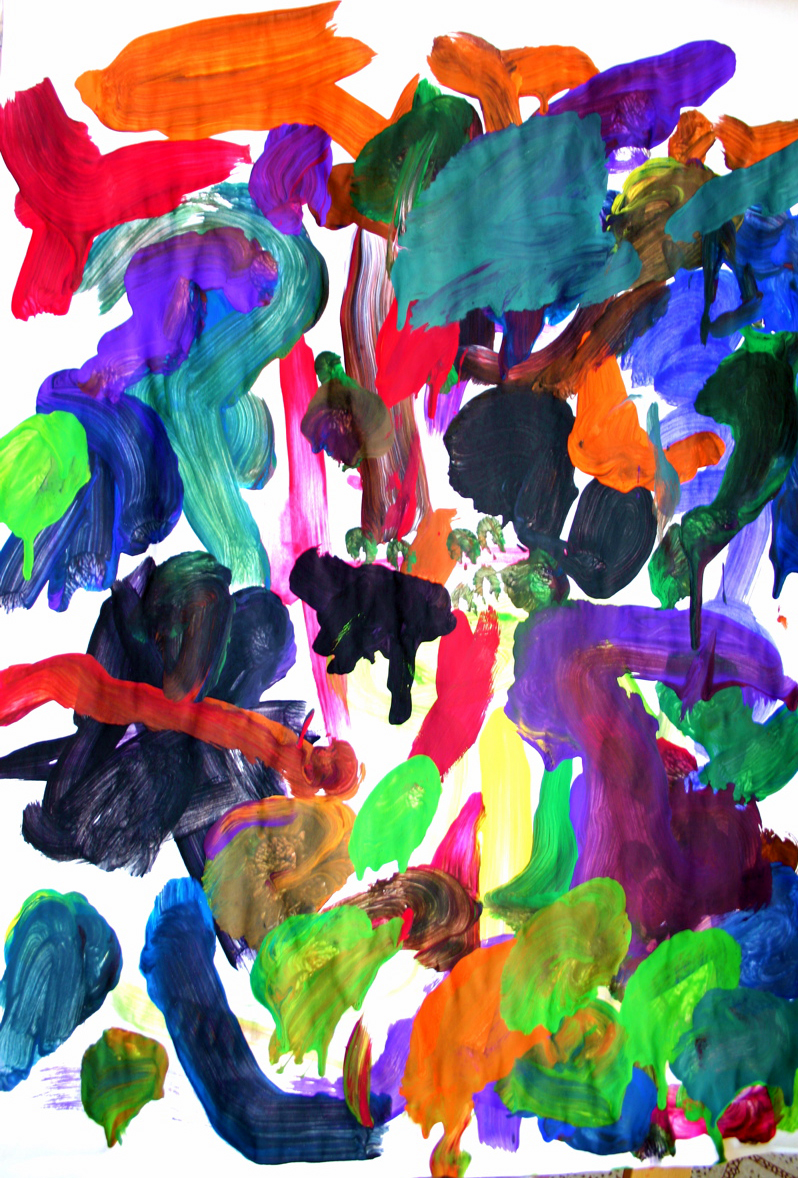
Hidden Sickle by Ford

Ford, when finally finished with his painting yesterday afternoon, stood back and looked at it. I stood beside him. I remarked on the different greens, how each had a different color mixed within it. I asked him about the painting, about what he was thinking about as he painted. He told me that there were images hidden inside. Could I, for example, find the hidden sickle? “You know, like Cronus’ sickle. Can you find it?”
It made me feel victorious, that he’d actually absorbed some of the stories I’ve been reading lately. And lately, we’ve been reading about the birth of the Titans, and how Zeus and his children came to be. I had gotten fed up with Pokemon and decided to take Ford’s zeal for characters and funnel that passion into mythology; this time, Greek mythology. Last year, we lurked for a while in Norse myths, but the Greek myths are hidden everywhere, like little green sickles, in the best (and in Pokemon’s case, the worst) of children’s literature and comics. They’re all a bunch of trading card characters. Like, the free kind.
Daily
Young @ Art

Comments (0)

Permalink

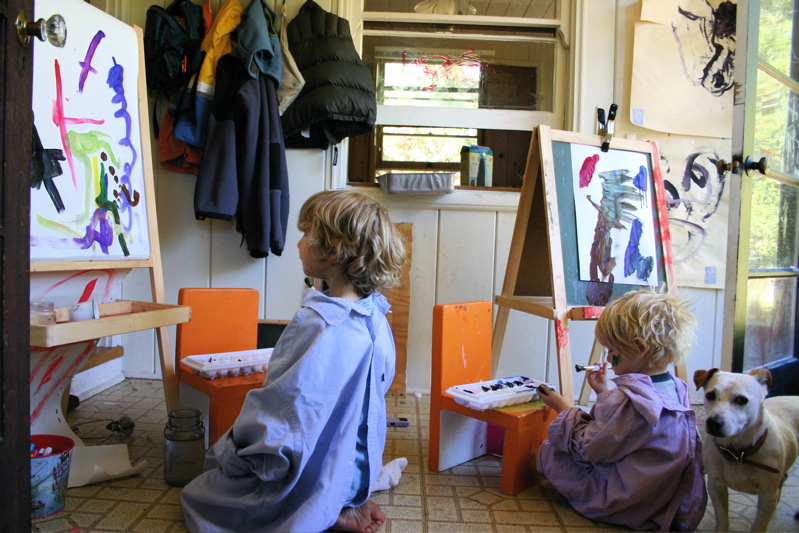
Tempera time

painting in the mudroom

Daily
Young @ Art

Comments (1)

Permalink

Signature Stamps

nameplate.JPG

There was an exhibit of Chinese paintings years ago, at the Houston MFA, that I remember. It was not the paintings that stick in my mind (although the landscapes were lovely) but rather the rectangular signature seals that the artists used to initial their work. It seemed such a designerly approach to a signature, one that appeared so…official, important, secret club-like. To some people it might look little more than a notarized stamp, an insitutionalized seal of authenticity. But for the simple reason of liking them, I decided the kids should have their own simple seals. Plus, the boys like stamps; it has a very satisfactory feel, the stamping of their artwork. I sense that this act makes their work feel more “official” once it’s done, too. It’s the little satisfactory things. And they’re so easy to carve from a piece of linoleum or rubber blocks. Just collect from your artists a pencil-written signature, with letters big enough to carve, and transfer the signature onto the stamp by rubbing the opposite side of the paper. Carve. Stamp. Voila! Repeat as necessary (and in our case, that’s quite often, indeed).

Young @ Art

Comments (0)

Permalink